GPU Audio is a deeptech startup rethinking how sound is processed by moving audio workloads from CPUs to GPUs. Their technology enables real-time, massively parallel audio processing and is used across very different worlds - from pro audio and gaming to automotive and immersive environments.
Goal:
Build a brand-new website that finally matches the level of the product
Challenges:
- Multiple products and use cases for very different audiences—from audio engineers to automotive OEMs
- Messaging and visuals had grown fragmented, with no single, consistent story
- Extremely deep tech that needed to make sense not just to engineers, but also to investors, partners, and non-technical customers
What we did:
- Worked directly with the founders and the tech team to strip the story down to its essence: what GPU Audio is, who it’s for, and why it matters
- Designed everything from scratch - structure, UI, visuals, 3D, motion, and all supporting assets
- Partnered closely with their developers through many iterations to make sure the site works across devices, stays responsive, and truly shows the quality of the technology behind it
Project Highlights:
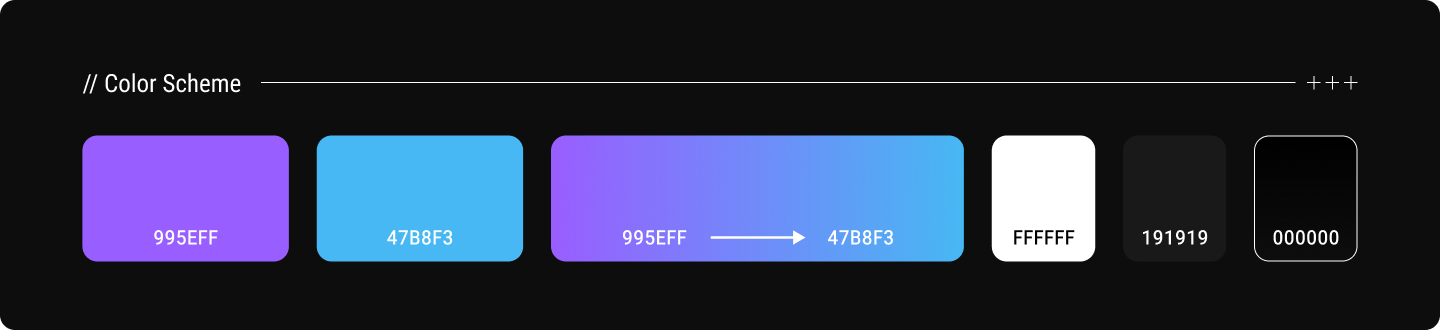
We kept the color palette simple and intentional. The violet–blue gradient reflects the core of GPU Audio’s tech - powerful and modern - without feeling overly “sci-fi.” The goal was a system that feels technical and serious, but still fresh, confident, and easy to live with across products and content.
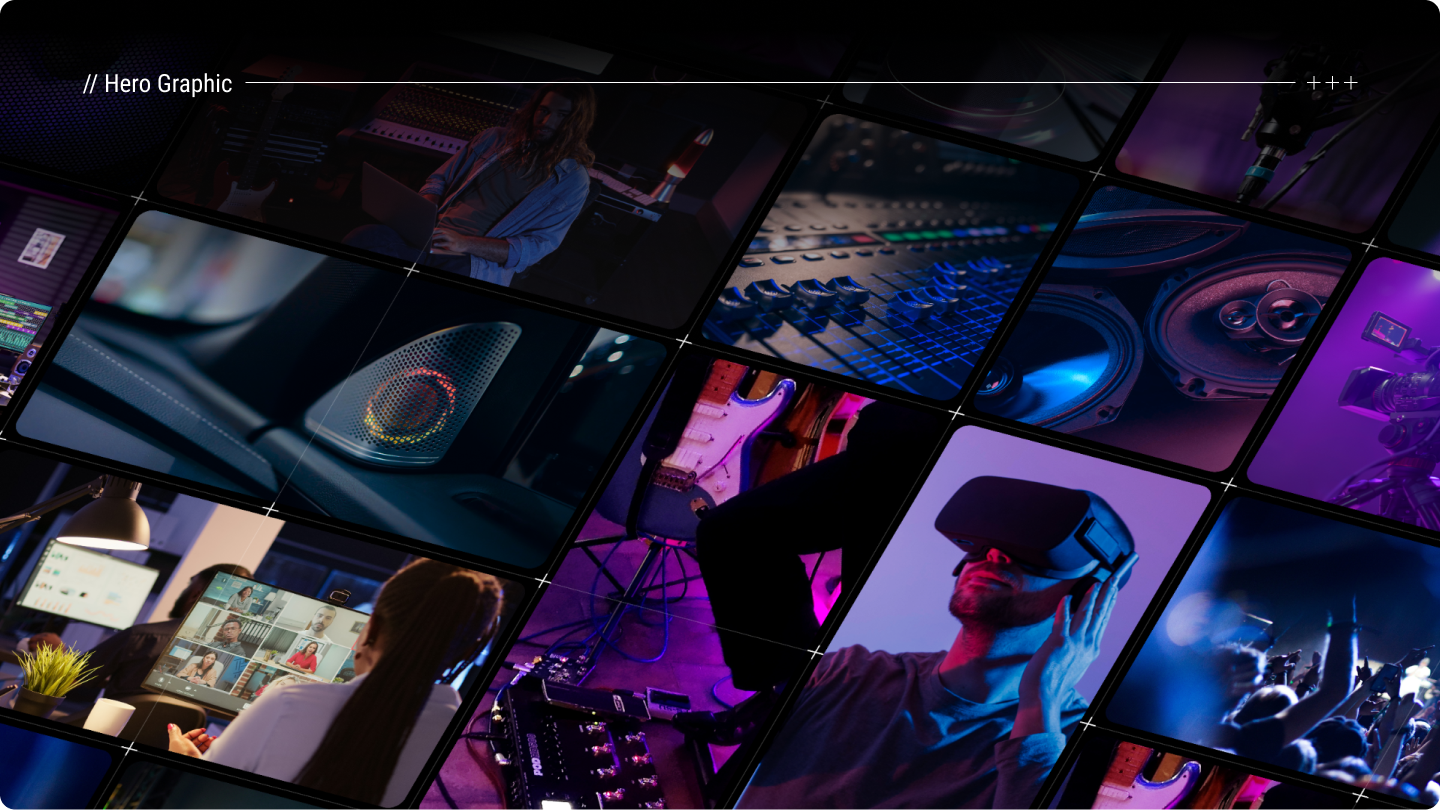
For the hero, we wanted to answer one simple question right away: where does this actually get used? The graphic shows both what GPU Audio already powers and what it can unlock as the industry shifts with it - new workflows, new experiences, and new ways sound can be created and delivered. It’s meant to feel forward-looking without being abstract: real people, real environments.
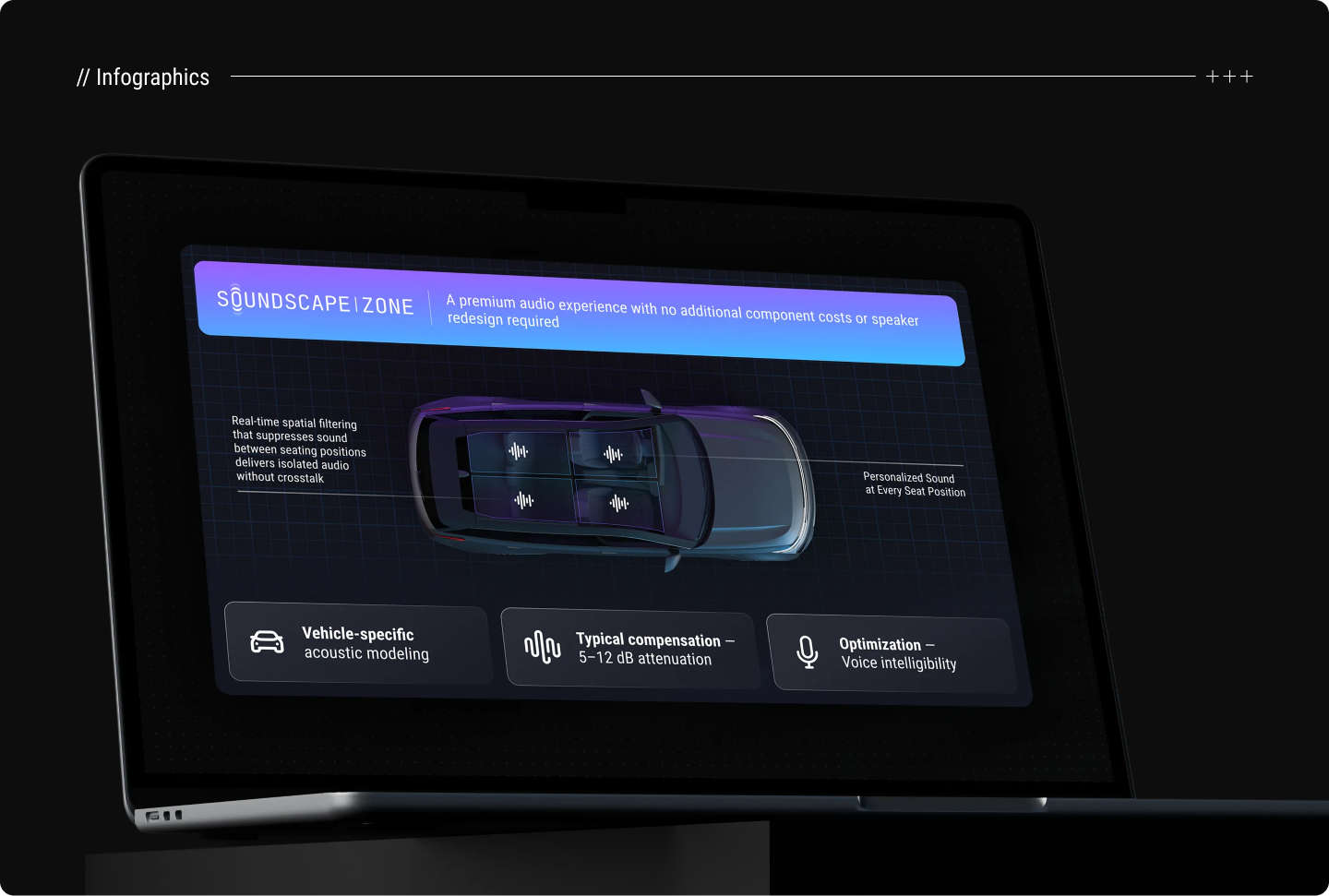
For the infographics, we focused on making complex, low-level audio tech understandable at a glance. Instead of diagrams that only engineers would love, we designed visuals that explain what’s happening and why it matters - using spatial layouts, simple icons, and short, plain-language labels. The goal was to help non-technical stakeholders follow the logic, while still feeling accurate and credible to engineers who know what’s under the hood.
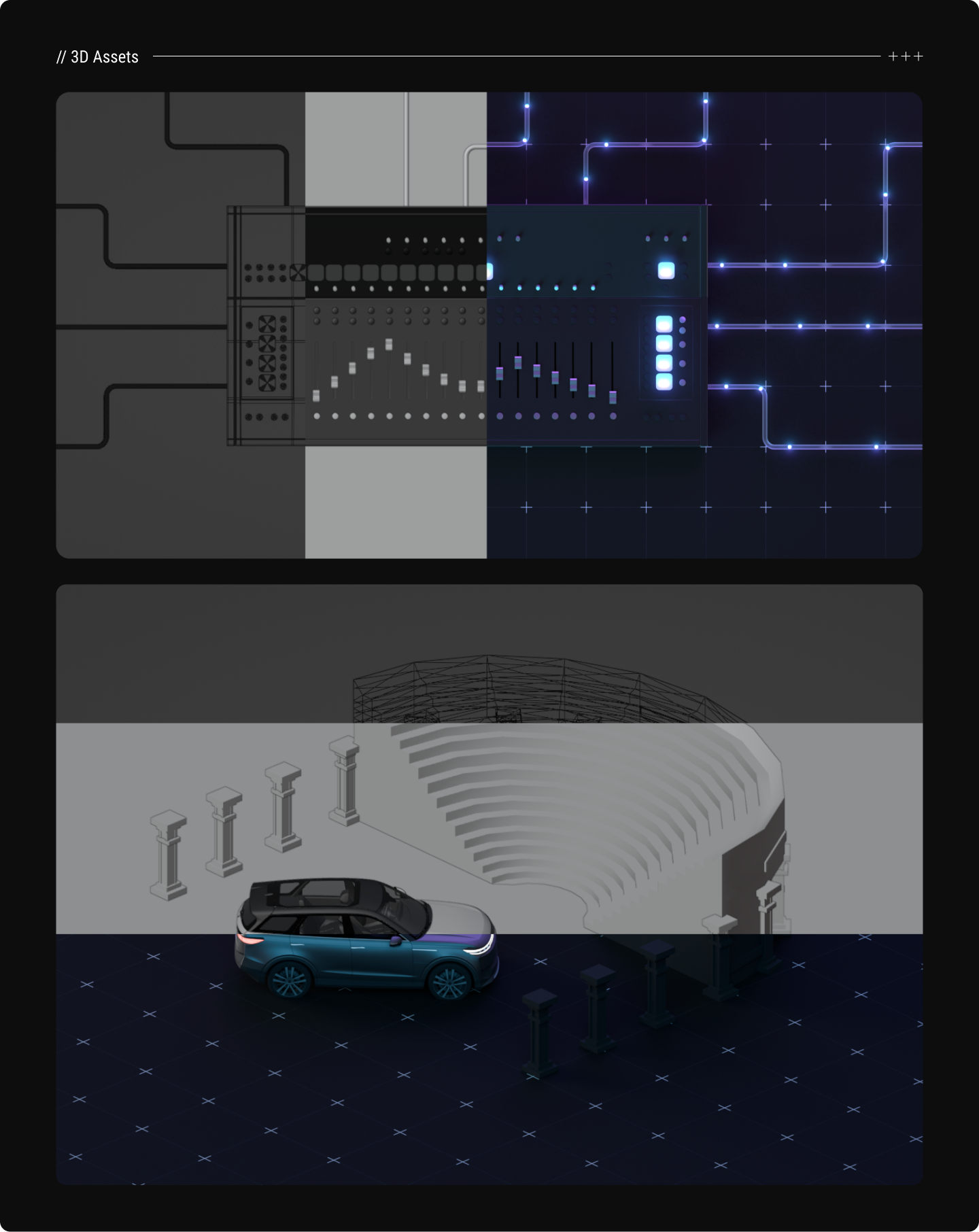
All 3D assets were crafted by our team, from first concepts to final renders. They now form the core of GPU Audio’s visual tone - how the technology is shown, understood, and remembered. Beyond explaining complex concepts, the 3D system gives the brand a consistent, ownable look that carries across the website, product stories, and future communications.
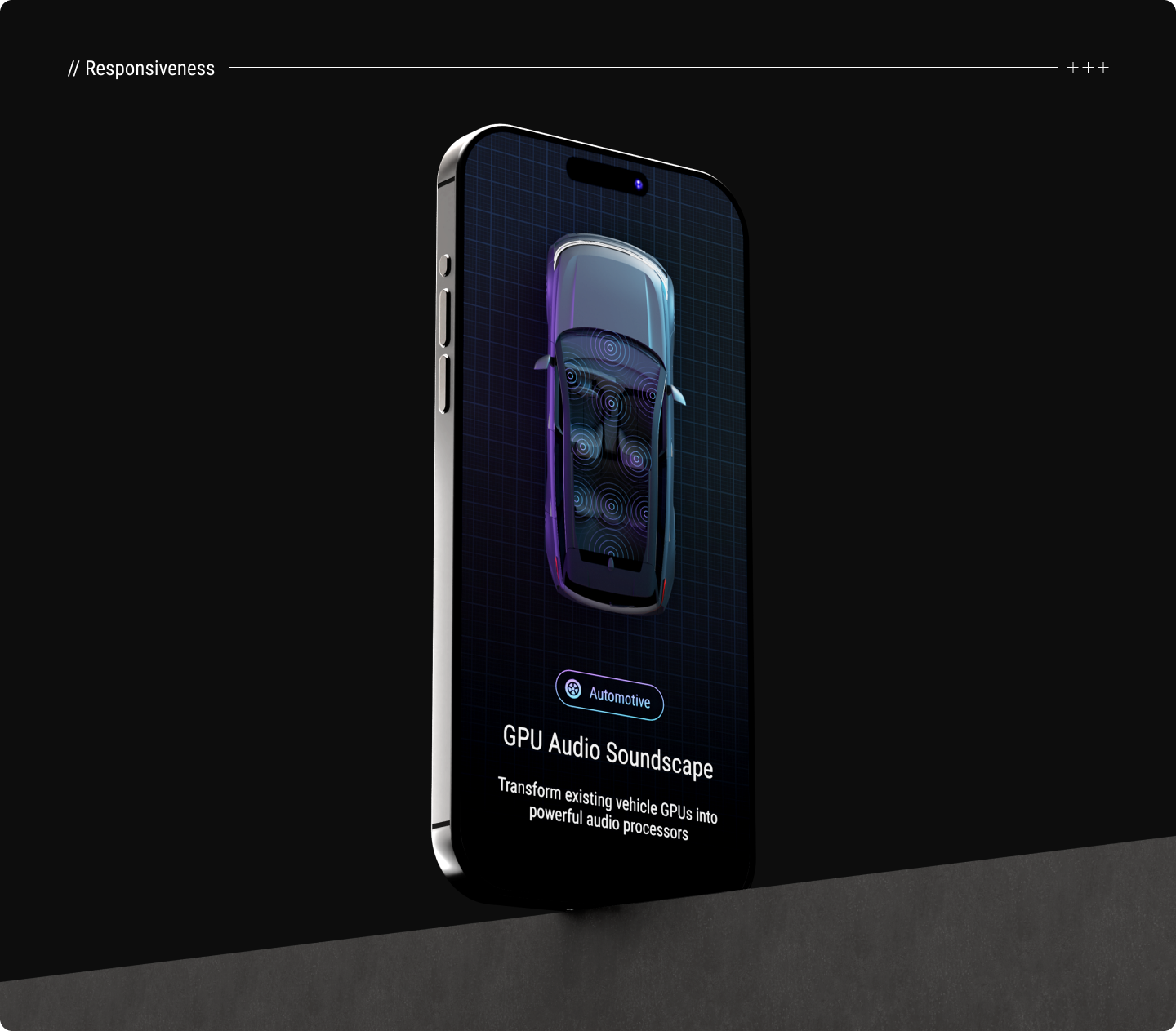
Responsiveness wasn’t something we “checked off” at the end. We went back and forth with the dev team a lot, testing how things actually behave on different screens and devices. The goal was simple: no broken layouts, no compromises, and no “it works better on desktop” excuses. Wherever you open the site, it should feel intentional and solid.
Results:
- A website that founders can confidently send to investors, partners, and customers without caveats or explanations on calls
- Clear separation of solutions and audiences, so visitors self-select and get to the point fast
- Complex GPU-level tech translated into language that works in sales decks, partnership discussions, and investor conversations
- A clean, consistent visual system the team can reuse across product launches, talks, and future pages

A word from the client

Alexander Talashov
Managing Partner, GPU Audio
Working with Launch Deck felt like working with another founding team. They helped us cut through the complexity of our own tech, shape a clear story, and turn it into a website we can confidently send to partners and investors.