What Investors Actually Look for in a Pitch Deck (We Asked 100+ of Them)
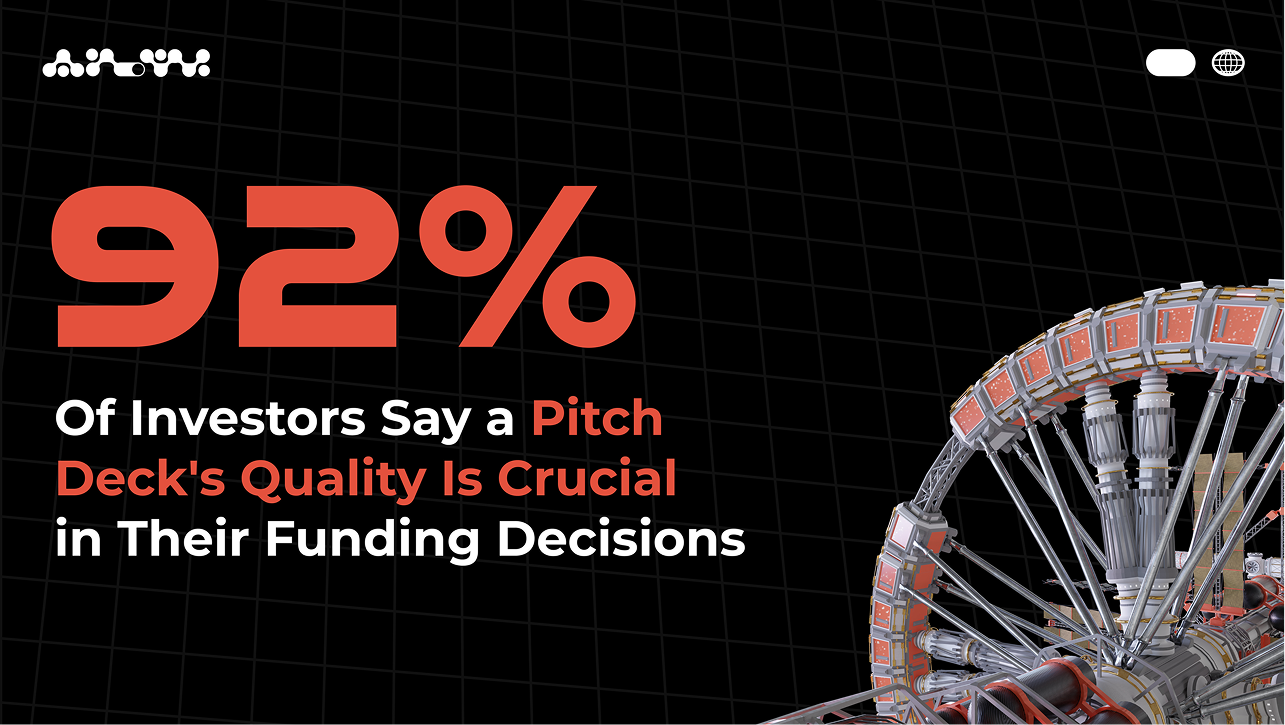
Most advice about pitch decks comes from founders who raised once, got lucky, and decided they're experts now. We wanted something more reliable. So we went straight to the source.
Over the course of several months, we interviewed more than 100 VCs, angel investors, and accelerator managers across 11 industries and 7 global regions. We compiled the results into our report, Rocket Your Fundraising: The New Pitch Deck Playbook. What came back wasn't always what founders expect to hear.
Here's what actually matters when an investor opens your deck.
The 4T Framework: Where Investors Start
At a startup meetup called Bootstrapping vs. Financing, a venture partner at Tribe Capital named KJ introduced a framework that stuck with us. He called it the 4Ts: TAM, Team, Tech, and Traction. You've probably heard each of these words before. But what most founders miss is that product-market fit is only one piece of a much larger puzzle. Investors evaluate all four simultaneously.
Let's break them down.
TAM: Market Always Wins
This came up in nearly every conversation we had with investors. Your solution can change. Your team can change. But you need to be in a market with real growth potential.
The mistake we see in about half the decks we review is that founders define their market too broadly. Saying you're targeting "the $400 billion global edtech market" tells an investor nothing about your actual opportunity. It tells them you Googled a number and pasted it.
What works better: start bottom-up. Identify the specific niche where your product creates the most value, define the people who care the most, and size the market from there. Investors told us repeatedly that a credible $50M bottom-up estimate beats a fantasy $10B top-down number every time.
A few things to include on your market slide: the problem you're addressing (big enough to build a business around), your target audience, evidence of demand, and room to scale. If you can show revenue potential across different scenarios, even better.
Team: Your Second Most Important Job
Did you know that 80% of unicorn companies had more than one founder? That stat came up in our research multiple times. Investors don't just invest in ideas. They invest in the people who can survive the three years of chaos it takes to make an idea work.
Early-stage investors told us they look for three things in a team slide: complementary skills between co-founders, relevant domain expertise, and evidence that you can attract talent. If you've convinced a strong CTO or a seasoned advisor to join before you've raised a cent, that says more than any revenue projection.
One thing founders overlook: your founding investor matters too. Several VCs told us they look at who else is already on the cap table. An investor who actively contributes to your growth, not just writes a check, signals that smart money has already validated your idea.
Tech: Start Small, Learn Fast
When you have a big idea, the temptation is to build the entire product before showing anyone. Our research suggests the opposite approach works better.
Investors at pre-seed and seed stages don't expect a finished product. They expect a minimum viable product that proves you can execute. Focus on the core features, get something functional in front of users, and collect feedback. The goal isn't perfection. It's learning.
The best tech slides we've seen don't try to explain every feature. They show the core value proposition in action, ideally with a screenshot or a short demo. Then they explain how user feedback is shaping what comes next. This tells investors you're building with the market, not in isolation.
Traction: The One That Changed the Most
This is where the fundraising landscape has shifted the most in recent years. In the post-2021 environment, investors have become more cautious and more pragmatic. Several VCs told us that traction is now the first thing they look at, not the last.
If you have paying customers, show them. If you don't, show a clear path to getting them. Whether that's through cold outreach, your network, or a well-tested marketing channel, investors want to see that you understand how to reach your target audience.
Track your KPIs and know them cold. Daily or monthly active users, lifetime value, customer acquisition cost, retention. The specific metrics depend on your industry, but you need to be measuring them.
One thing that surprised us in our interviews: multiple investors said that simply showing exponential growth on a revenue chart doesn't work anymore. If you're growing that fast without capital, why should they invest? Instead, show how additional funding will accelerate what's already working. The shift is subtle but it matters.
What the Research Told Us That Surprised Us
A few findings from our 100+ interviews that contradicted common advice:
Design matters more than most founders think.
We serve as mentors and judges at startup accelerators, and we regularly review 50+ applications in a single day. When every deck has roughly the same information, the ones that are clean, readable, and well-designed get more attention. Not because investors are shallow, but because good design signals competence. It tells them you care about how you communicate.
The "ideal" number of slides doesn't exist.
Some investors told us they prefer 10 slides. Others said 15-20 is fine. What they all agreed on: every slide needs to earn its place. If a slide doesn't move your story forward or answer a question they'll have, cut it.
Your closing slide matters way more than your opening slide.
Most decks end with "Thank You" or a contact email. That's a wasted opportunity. The last thing an investor sees should be the thing that sticks. Your mission. Your vision. The future you're building toward. Make it count.
The Bottom Line
Your deck needs to answer four questions convincingly: Is the market big enough? Can this team pull it off? Does the product work? Is there evidence people want it?
Nail those four and you're ahead of 90% of the decks investors see.

download The New Pitch Deck Playbook
Full breakdown from our investor research